
Now that we are firmly in the 21st century, there is no denying that digital technology is an intrinsic part of our lives and how we connect with each other. But it can also, crucially, help anyone, not just academics and historians, to connect with their past.
According to YouGov, genealogy was the 117th most popular leisure activity in the UK in 2024, beating out golf, horse racing, and cross stitch. The general public can and, overwhelmingly, do conduct research on their family trees using the deluge of digital resources and records that now exist online. Millions of census records, marriages, births, and deaths can be searched through from the comfort of one’s own home.
Many people don’t think about how those records ended up on their screens, not realising that it likely took a team of people, fighting with lighting equipment and handling crumbling old books with excruciating care, to preserve those records and make them almost universally accessible. Where would we be without the ability to access these documents? What valuable details of genealogical and cultural history would we be missing?
Well, there is one particular instance in which we almost found this out.
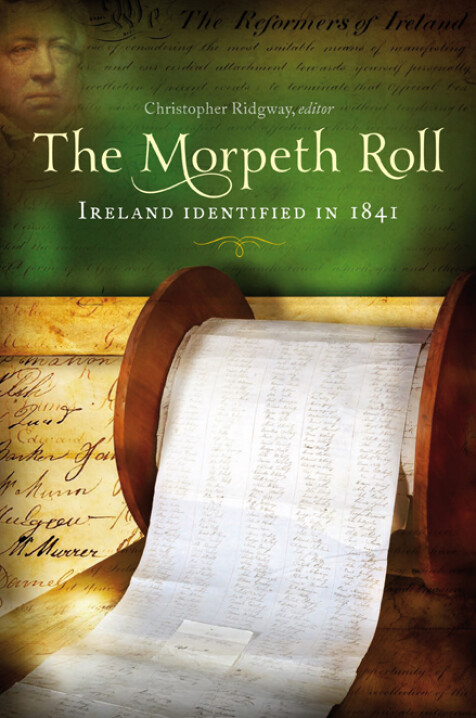
The Morpeth Roll is a historical object with a fascinating story, beginning in 1841. In 1841 George Howard, aka Lord Morpeth, stepped down from his role as the Chief Secretary for Ireland. He had been very popular in his post and was given a very special parting gift: a “petition of “outpourings of affection and support” from across the country” (Maynooth University).
During his time as Chief Secretary between 1835-1841, Lord Morpeth garnered a great deal of support from fellow politicians as well as the Irish public more generally, helping to introduce “measures to redress the imbalances between Protestant and Catholic appointees in the constabulary and magistracy” (Maynooth University)
When his time as Chief Secretary came to an end, supporters and collaborators, led by Daniel O’Connell and the Duke of Leinster, wanted to show their thanks and support for Lord Morpeth and the reform he worked towards. Within six weeks, 652 sheets of paper were sent far and wide across Ireland, accruing approximately 160,000 signatures from all over the country.
They were then attached together to make one long scroll (420 meters long, to be precise), which was then wound onto a large wooden bobbin and presented to Lord Morpeth, who was deeply touched by the gift, calling the roll ‘the richest heir-loom I could bequeath to the name I bear’ (Maynooth University).
However, after the roll had been transported to his family estate in Yorkshire, Lord Morpeth carried on with his life and political career until his death in 1864. The Morpeth Roll was forgotten, spending well over 150 years sat in the basement of Castle Howard. It was discovered in the early 2010s by Professor Christopher Ridgeway, who was excited and bewildered to rediscover the scroll and what it meant to Lord Morpeth and the history of Ireland.